1. My favorite newspaper front page is the Staten Island Advance from February 22, 2017. I like the use of space and its organization.
2. My favorite headline from this newspaper is "Heroin Saved My Life" because it catches a reader's attention considering heroin is known to TAKE lives. I like it because it's an interesting story.
3. There are 3 stories on the front page of this newspaper.
4. All of the newspapers All of the newspaper front pages have several stories with intriguing headlines, 12 point font for the stories themselves, and a unique and organized design to draw attention to itself and to be easily followed.
5. The newspapers differ in styles of writing and design, subjects of the stories and even languages at times.
Wednesday, February 22, 2017

Wednesday, February 15, 2017

Monday, February 6, 2017
 fear of being lost
 fear of growing up
 fear of being trapped

Monday, January 30, 2017
Self Portrait vs the Selfie
What is a selfie?
A picture taken with the front camera of a device featuring the same person who is also taking the photo.
What is a self portrait?
Self portraits are meant to symbolize something about a person and is a type of art.
Is there a difference? If so, what?
A self portrait is meant to illustrate details or important qualities of a person within the picture while a selfie can be taken casually just to have a picture of yourself or with your friends.
What style do you prefer?
I prefer self portraits because they are more meaningful than a quick selfie.
Is one more valuable than the other? Why?
No picture is more valuable than another. It is all relative to perspective. someone may think that he selfie is more valuable then the self portrait while others may disagree. Maybe a selfie you have represents a specific time that was really important to you.
My selfie:

Wednesday, January 25, 2017
Yearbook Introduction
25 Things that Should Be in Every Yearbook:
1. theme
2. title
3. captions
4. volume
5. school name
6. year
7. location
8. index
9. 4 sections
10. pictures
11. stories
12. q and a's
13. infographic
14. special events coverage
15. headlines
16. ads
17. quotes
18. dominant photo
19. modules
20. full coverage of info in captions and stories
21. sports coverage
22. distribution of female and male subjects
23. academic coverage
24. include student and staff opinions
25. include student and staff views
"Your Chance"
2. What school is it from?
2. What school is it from?
Round Rock High school .
3. What "thematic elements" do you see in your book? This means what elements are evident from beginning to end of the book.
3. What "thematic elements" do you see in your book? This means what elements are evident from beginning to end of the book.
Each page has a recurring color scheme that keeps the book interesting but flows nicely.
4. How many sections are in your book? This could be tough to figure out, but do your best.
4. How many sections are in your book? This could be tough to figure out, but do your best.
There are 4 sections and the book is organized chronologically. The four sections are Spring/Fall, Winter, Spring, and Reference.
5. What is your favorite "spread"? A spread is 2 pages about the same topic.
5. What is your favorite "spread"? A spread is 2 pages about the same topic.
My favorite spread is pages 26-27. It is a feature called dress to impress and it shows many different students wearing different clothes and they are organized by style of clothing.
6. Is there an Index in your book?
6. Is there an Index in your book?
Yes, it is in the back of the book and shows where each student appears in the book.
7. Are there photos of groups of people, like clubs and organizations?
7. Are there photos of groups of people, like clubs and organizations?
Yes, activities such as sports, fine arts, and clubs are featured.
8. Is there a table of contents?
8. Is there a table of contents?
Yes, it shows readers what to expect from the book and how it is organized in the first few pages.
9. How many people go to the school whose book you have?
9. How many people go to the school whose book you have?
3,170 students.
10. What state is your book from?
Texas.
10. What state is your book from?
Texas.
Prompt Shoot #4
 Pause (vertical cropped 8 by 10, resolution 3000)
 Pose (free crop, resolution 240, b&w)
 Connected (horizontal cropped 7 by 5, resolution 180)
 Footprint (horizontal cropped 6 by 4, resolution 72)
Tuesday, January 10, 2017
Phobia Shoot
A. Phobia-an extreme or irrational fear of or aversion to something.
B.
Chronophobia- Fear of time
Cacophobia- Fear of ugliness
Decidophobia- Fear of making decisions
Ecophobia- Fear of home
Enosiophobia or Enissophobia- Fear of having committed an unpardonable sin or of criticism
C.
1st photo shoot: Phobia of prolonged pain; emotional or physical
-Flash photo at night in a dark forest, background is completely blank and black creating simplicity, a terrified subject has blood (paint) across their face and hands, holding a noose in one
2nd photo shoot: Carnophobia- fear of meat
-Cloudy day, subject holding an animal in their right hand, sliver of meat hanging delicately out of the right side of their mouth and another piece in the left hand, subject turns head slightly to the left of the page and is also situated on the left side of the page to take advantage of rule of thirds, photo takes advantage of cropping by taking the photo tightly framed from the nose down
3rd photo shoot: fear of dead things or corpses
-bath of colored substance with a vacant body laying underneath the water. have a few ideas for angles and the position of the subject for this shoot
Wednesday, January 4, 2017
2k16 Review

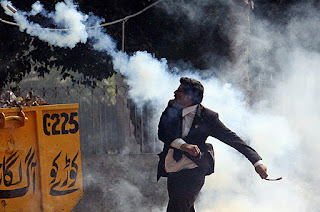
This is one of my favorite photos of 2k16 because it illustrates the pain from violence in northern Turkey due to police clashes involving tear gas.

I selected this photo because I feel like it symbolized more than what is ale to be easily observed in the photo itself.

I chose this photo partly because I enjoyed it's aesthetic qualities but also because I enjoyed the idea of secret service agents at Donald Trump's golf course.
What is the best song of 2016?

Out of the choices primarily limited to pop music in the Top 100, the best song of 2016 is Water Under the Bridge by Adele. She is one of the more well rounded artists on the list. I also favor her over many of the other artists on the list because she has roots in the early 2000's and had to earn her place at the top of the music industry.
What is the best movie of 2016?

Sing Street. This was an extremely dynamic masterpiece of film. I saw this movie the day it was released alone in the Violet Crown Theatre and thoroughly enjoyed it. There was no mention of the film until months after, meanwhile by then I had already purchased the film and watched it several times since then. Each time I watch it, I notice another perfectly thought out detail that I had not noticed before, however a director or another provider to the works of making the film had been creative enough to include it themselves.
What is the most important news story of the year?

The most important news story of the year is 5 Things to Know About the Economy. It is important for people to be aware of the updates in our economy. People are becoming less and less knowledgable of basic functions of the government and economy, particularly in the new generation. Because of this, it is even more important that people maintain basic knowledge of the systems that are occurring around them in their government.
Who was the most important person of 2016 in your opinion?

Simone Biles was the most important person of 2016 because she was an accepted figure across the nation and caused little controversy if not none. She used her following to become a good influence across the nation.
What was the biggest sports OR entertainment story OR sports/entertainment person of 2016?

Steven Spielberg is one of the most powerful figures of entertainment. In 2015, his megahit Jurassic World gave him a nice lead helping him to direct Bridge of Spies, resulting in his recent hit called The BFG.
1. During my holiday I spent quality time with my friends.
2. My resolutions for the year are to become more healthy and productive.
3. In 2017 I hope to make more friends and become closer with those whom I already have.
Monday, December 19, 2016
Extra Credit
1. The man, Han, was killed after being pushed into the subway track and was not strong enough to lift himself up. The photographer was present at the scene and after determining that he would not be able to save the man, he captured photos of the event instead.
2. The photographer said that he took the photo so that the conductor would see his flash and stop.
3. I think that it is important that photos like these should be taken, but not if a life could have potentially been saved.
4. I think that as a photographer, he did what was instinct to him. If he was truly unable to help the man, then photos are sadly more valuable.
5. I think that this photo makes a dynamic cover page, but is extremely disturbing for many people who disagree with this type of journalism.
6. Photojournalists have a passion for capturing moments of life as they happen at the cost of a few deaths. Although this is extremely unsettling, it is their instinct and contribution to the world.
7. I think that a photojournalist should always use their judgement before choosing if they should involve themselves in the situation or take photos. If they could potentially help someone or save a life, photos are not the priority. If a situation is hopeless, photos might as well be taken.
8. Photojournalists should always avoid influencing the events that they photograph. If they were to do this, the event would not be authentic, but posed for a camera.
9. The best response is exactly what Abbasi said. There was no way that he could have save the man, so he helped in the way that he could, which was to take photos.
Monday, December 12, 2016
Final Exam Review
Writing Captions
1.
On October 27th in the upper east side of Philadelphia, James Ramsey escapes his burning apartment complex is order to survive. According to many of the residents, the building had a history of catching fire due to electrical wire.
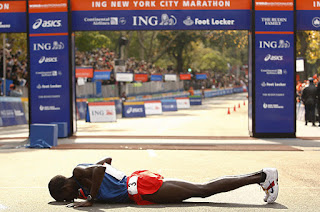
After winning the New York City Marathon on September 2nd, Kenyan runner kisses the ground to show his gratefulness for his victory. In addition to his win, the runner set a new personal record.
Rules of Photography
1. Rules of Thirds- placing a subject off center, vertically or horizontally
2. Balancing Elements- placing subjects within frame so that they are equal in visual weight
3. Leading Lines- using lines to attract a viewers eye to the subject
4. Repetition-repeating visual elements to create rhythm and unify the elements of the photo
5. Viewpoint- making the photo more dynamic by approaching the subject at multiple angles
6. Background-making the background of the photo simple to draw more attention to the subject
7. Create Depth- amount of distance between photographer and subject. Tools are background and foreground.
8. Framing-placing a subject in a frame in order to focus attention on it
9. Cropping-leaving unimportant details of a photo out of the frame and focusing on one specific aspect of the photo
10.Mergers + Avoiding Them- when a part of the photo clashes with something else in the picture, distracting from the subject. To avoid this, arrange the subject in another way.
1.

On October 27th in the upper east side of Philadelphia, James Ramsey escapes his burning apartment complex is order to survive. According to many of the residents, the building had a history of catching fire due to electrical wire.

After winning the New York City Marathon on September 2nd, Kenyan runner kisses the ground to show his gratefulness for his victory. In addition to his win, the runner set a new personal record.
Rules of Photography
1. Rules of Thirds- placing a subject off center, vertically or horizontally
2. Balancing Elements- placing subjects within frame so that they are equal in visual weight
3. Leading Lines- using lines to attract a viewers eye to the subject
4. Repetition-repeating visual elements to create rhythm and unify the elements of the photo
5. Viewpoint- making the photo more dynamic by approaching the subject at multiple angles
6. Background-making the background of the photo simple to draw more attention to the subject
7. Create Depth- amount of distance between photographer and subject. Tools are background and foreground.
8. Framing-placing a subject in a frame in order to focus attention on it
9. Cropping-leaving unimportant details of a photo out of the frame and focusing on one specific aspect of the photo
10.Mergers + Avoiding Them- when a part of the photo clashes with something else in the picture, distracting from the subject. To avoid this, arrange the subject in another way.
Friday, December 9, 2016


Monday, December 5, 2016


Wednesday, November 30, 2016


Monday, November 28, 2016
100 Photos of All Time

V-J Day in Times Square by Alfred Eisenstaedt
1. I chose this image because it resonated with me in a way that made me feel happy and want to know more about the picture.
2. This photo was taken at Times Square at the end of World War II in 1945. Eisenstaedt was hired by LIFE magazine and made it his personal mission to "find and catch the storytelling moment," leading him to Times Square where this photo was taken.
3. In addition to this photo, additional photos of the ending of World War II gave more information about the time period that the photo was taken.
4.

5.
Alfred Eisenstaedt
Born: December 6, 1898 Death: August 23, 1995
Born in Tczew, Poland
Attended Humboldt University of Berlin

The Pillow Fight by Harry Benson
1. I chose this photo because I liked how it captured this action and emotion.
2. This photo was taken at the George V Hotel of the Beatles the night that they each discovered that "I Want to Hold Your Hand" hit No. 1 in the US. Originally, Harry Benson was upset to hear that he would be covering the Beatles and felt that he was a more respected journalist than a rock and roll writer. After meeting the band, he was grateful that this was the job assigned to him and that it changed his life in many ways.
3. In addition to the actual photo, I learned from a video provided about details of the story behind the pillow fight.
4.

5.
Harry Benson
Born: December 2, 1929 Death: 1953
Born in Glasgow, United Kingdom
School attended: not found

Trolley-New Orleans by Robert Frank
1. I chose this photo because I enjoy how it captured emotion.
2. This picture is significant because it was taken a few weeks before Rosa Parks refused to give up her seat in Alabama. It represents the irony existing in America during this time.
3. no additional information
4.

5.
Robert Frank
Born: November 9, 1924 Death: not applicable
Born in Zurich, Switzerland
School attended: not found

Windblown Jackie by Ron Galella
1. I chose this photo because I like how the photo captured this woman the moment before she recognized that she was being photographed.
2. This photo was taken due to Ron Galella's obsession with photographing Jacqueline Kennedy Onassis. Many were fascinated with photographing her, especially after her husband, John Kennedy, died.
3. The video provided along with the information about the photo gave viewers insight on Galella's opinion behind his career as a photographer and his journey leading up to "Windblown Jackie."
4.

5.
Ron Galella
Born: January 10, 1931 Death: not applicable
Born in The Bronx, New York City
School attended: Art Center College of Design

Fire Escape Collapse by Stanley Forman
1. I chose this picture because it made me feel sympathy for the mother and goddaughter falling from the fire escape.
2. This picture was taken the day that Forman got a call about a fire on Marlborough Street. He figured it was a routine fire rescue, however after a fire escape gave way leaving a mother and goddaughter falling to the ground, Forman took a picture that would change his life.
3.no additional information
4.

5.
Stanley Forman
Birth: July 10, 1945 Death:not applicable
Born in Winthrop MA
School attended: Benjamin Franklin Institute of Technology
Thursday, November 17, 2016
Fashion Photography
1.
-enlarged lips
-lengthened neck
-lowered eyebrows
-thickened hair
-slimmed face
-enlarged eyes
-toned face
2. lighter skin, fuller lips, evened out nose, bigger eyes, shoulder moved up, skin glow, thinner arm, thinner stomach, thinner back, smaller boobs, longer thighs, smaller feet, thinner legs, taller legs, longer neck, thinner face, thinner neck, highlighted face, lighter hair, lighter skin, etc.
3. smaller butt, smaller legs, smaller arms, wrinkles removed, thinner back, thinner waste, cleaned up armpit, boobs altered smaller, face made slimmer, more hair, etc.
4. It is not ethically acceptable to change a person's appearance like these in a photo because it alters an audience's perception of reality and beauty.
5. There are circumstances where manipulations such as these are more ethically acceptable, but not in this sense of advertising. Some examples of these exceptions are for the purposes of art, irony, and etc.
6. Changes such as levels and cropping are completely acceptable, along with changes that help to restore the original environment that the picture was taken in. In advertising, I believe that changes such as those previously listed are acceptable along with other softcore manipulations in Photoshop.
7. Fashion photography and photojournalism differ in many ways. Fashion photography is heavily manipulated in order to make an audience perceive perfection. On the other hand, photojournalism is minimally manipulated in order to show an audience the truth.
8. Fashion photography has little to no relationship with reality while photojournalism is based on reality. I believe that the ethical practice of fashion photography should come much closer to the median between reality and dreams while photojournalism is at a comfortable point and should maintain it's current relationship with reality.
9. I think that these three videos are being shown to us to widen our knowledge of the power of photo manipulation so that we have a more complete opinion of it and how it relates to our work in photojournalism.
10. None of these videos are about guys because it is less common for men to be exploited the way that women typically are in advertisement.
Wednesday, November 16, 2016
5 Websites
Photos everyone should know how to make:
http://petapixel.com/2014/12/01/6-types-photos-know-make/
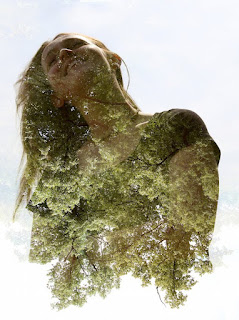
The website discussed useful tricks for taking intermediate level photos. Some types of photos discussed were fake tilt and shift, forced perspective, long exposure landscape, digital infrared, double exposure portrait, and 360 degree polar panorama photos. Some tricks were a matter of camera settings while some regarded photoshop or equipment.
I chose this photo because I liked the double exposure tactic it used and what I felt like the photo represents. Some rules of photography used are viewpoint and simplicity. The photographer of this photo isn't provided.
Spiral Staircases
http://petapixel.com/2014/12/19/disorienting-beauty-spiral-staircases-old-abandoned-buildings/
(the photo I chose is the last photo provided on the site)
This website examines a selection of photos called "Abandoned Staircases." A photographer travels across Europe to explore abandoned buildings and photograph the staircases.
I chose this photo because I like the depth in it and the vibe that it gives off. Some rules of photographh used in this photo are depth and possibly viewpoint. Christian Richter took this photo.
Great Portraits
http://blog.phowd.com/2014/09/7-tips-shooting-great-portrait-photographs/
(the photo I chose to post is the second on the site)
This site guides photographers to think outside of the box while shooting portraits. Some tips were to break the ice with the subject, exit the subject's comfort zone, direct the subject to look off camera, take advantage of negative space, break the rules of photography, and to tilt the horizon line.
I picked this photo because I appreciate how it used two of the tips provided on the site: gaze directed off camera and taking advantage of negative space. A rule of photography in this photo is rule of thirds. The photographer of this photo isn't provided.
Style
http://petapixel.com/2014/08/25/approaching-problem-style/
(the photo I chose to post is the first photo provided on the site)
This site guides photographers on how to develop a personal photography style. One thing that the site says is that the excercises that are being discussed will not develop your style, but give you thr muscles to develop it.
I picked this photo because I enjoy how the subject was not looking at the camera and the depth that the staircase added to the photo. Some rules of photography in this photo are depth and rule of thirds. The photographer is unknown.
Killer Timelapse
http://blog.ted.com/how-to-create-a-killer-timelapse-with-joe-capra/
This site features an interview with Joe Capra about his work with timelapse. It featured a video that he has taken.
The time lapse is of different locations in Rio de Janeiro made by Joe Capra. He was inspired by Tom Lowe. I learned the process of setting up a time lapse and how to pace different time lapses.
http://petapixel.com/2014/12/01/6-types-photos-know-make/

The website discussed useful tricks for taking intermediate level photos. Some types of photos discussed were fake tilt and shift, forced perspective, long exposure landscape, digital infrared, double exposure portrait, and 360 degree polar panorama photos. Some tricks were a matter of camera settings while some regarded photoshop or equipment.
I chose this photo because I liked the double exposure tactic it used and what I felt like the photo represents. Some rules of photography used are viewpoint and simplicity. The photographer of this photo isn't provided.
Spiral Staircases
http://petapixel.com/2014/12/19/disorienting-beauty-spiral-staircases-old-abandoned-buildings/
(the photo I chose is the last photo provided on the site)
This website examines a selection of photos called "Abandoned Staircases." A photographer travels across Europe to explore abandoned buildings and photograph the staircases.
I chose this photo because I like the depth in it and the vibe that it gives off. Some rules of photographh used in this photo are depth and possibly viewpoint. Christian Richter took this photo.
Great Portraits
http://blog.phowd.com/2014/09/7-tips-shooting-great-portrait-photographs/
(the photo I chose to post is the second on the site)
This site guides photographers to think outside of the box while shooting portraits. Some tips were to break the ice with the subject, exit the subject's comfort zone, direct the subject to look off camera, take advantage of negative space, break the rules of photography, and to tilt the horizon line.
I picked this photo because I appreciate how it used two of the tips provided on the site: gaze directed off camera and taking advantage of negative space. A rule of photography in this photo is rule of thirds. The photographer of this photo isn't provided.
Style
http://petapixel.com/2014/08/25/approaching-problem-style/
(the photo I chose to post is the first photo provided on the site)
This site guides photographers on how to develop a personal photography style. One thing that the site says is that the excercises that are being discussed will not develop your style, but give you thr muscles to develop it.
I picked this photo because I enjoy how the subject was not looking at the camera and the depth that the staircase added to the photo. Some rules of photography in this photo are depth and rule of thirds. The photographer is unknown.
Killer Timelapse
http://blog.ted.com/how-to-create-a-killer-timelapse-with-joe-capra/
This site features an interview with Joe Capra about his work with timelapse. It featured a video that he has taken.
The time lapse is of different locations in Rio de Janeiro made by Joe Capra. He was inspired by Tom Lowe. I learned the process of setting up a time lapse and how to pace different time lapses.
Monday, November 7, 2016
Magazines 2
Image Based
Image based covers are normally focused on one or a few people posing for the camera. This approach is use in almost all fashion magazines, celebrity magazines, and men's magazines. The nature of the photography has to coincide with that of the publication style.
Illustration Based
This is one of the first concepts of magazine covers. All the way from the mid 30's to the 20th century, illustrations were the only way to develop a cover. Now, illustrations are much less common and only primarily used to show something funny or unusual and draw attention to the magazine this way.
Type Based
This is another rare approach, however more prevalent than illustrated covers. They are meant to be striking or shocking and draw a reader's curiosity using this method. Often times the type says something that calls for further explanation.
Concept Based
This combines the image based, illustration based, and type based methods of cover design. They are meant to be easily understood by a viewer immediately. They are typically used in business magazines or independent magazines.
Favorite Cover
Favorite

"New York’s “Spring Fashion” cover with actress Elle Fanning has artist Will Cotton revisiting Johannes Vermeer’s famous painting “Girl With a Pearl Earring” in pose, expression, and lighting, while Fanning’s Vivienne Westwood–inspired headpiece made of icing and designed by Cotton prepares readers for the stunning “Candy Land” portfolio inside the magazine. Cotton has been using candy in his artwork “as a metaphor for pure pleasure” since the late nineties, and used spring looks as inspiration for New York."
I like this cover because of the creative feel that the flowers give it. The proximity of the text is very simplistic and organized. The font type and white coloring is a common thread throughout the whole cover design, giving every word on the page a purpose and organized sense. The woman pops out from the black background, drawing attention to the cover. A tactic like this is very useful to sell more copies of your magazine. The aesthetic image makes the magazine emotionally irresistible. All of the information about the magazine and its contents are given on the cover.
Subscribe to:
Posts (Atom)